


更多文章 More articles
Multi-Station Cold Forging Process Pain Points (Focus: Precision Punch Pins & Cutter Blades)
The Critical Impact of Punch Pin and Cutter Precision on Yield Rate in Multi-Station Cold Forging for Screws
In multi-station cold forging processes for screw manufacturing, the precision of the punch pin and cutter blade plays a decisive role in determining final product yield.
In the high-end fastener manufacturing industry, multi-station cold forging has long become the mainstream production method. However, as products evolve into multi-step screws, complex head geometries, and micro high-precision fasteners, maintaining a stable yield rate has become one of the most challenging issues for engineers and R&D teams.
Common Problems You May Encounter
- Unstable dimensions and excessive tolerance deviation
- Head cracks or lap defects
- Insufficient material filling or uneven flow
- Short tool life leading to frequent replacements and reduced productivity
In most cases, these issues are not caused by machinery—but by insufficient precision in punch pins and cutter blades.
1. The Core of Multi-Station Cold Forging: Precision Tooling Dominates Everything
Multi-station cold forging is a room-temperature forming process that transforms wire into high-precision fasteners through sequential forming stations.
Key advantages:
- High productivity (dozens to hundreds of parts per minute)
- High material utilization (no machining waste)
- Near net shape forming capability
However, this also means:
👉 Errors at each station are amplified cumulatively
Studies indicate that improper material flow or poor tooling design can easily lead to defects such as cracking, underfilling, and stress concentration in multi-stage forming.
2. Punch Pin Precision: The Primary Factor in Forming Stability
2.1 Role of the Punch Pin
In cold forging, the punch pin is responsible for:
- Applying forming pressure directly
- Controlling material flow direction
- Defining critical product dimensions (head shape, recess, internal features)
2.2 Problems Caused by Insufficient Precision
Low-precision punch pins can result in:
- Eccentricity in the screw head
- Inconsistent forming depth
- Stress concentration leading to cracks
- Surface defects or indentation marks
Additionally, punch pins are subjected to high cyclic loads, making them prone to fatigue failure, which further impacts dimensional stability.
2.3 What Engineers Actually Care About
When engineers search for high-precision punch pins, they are really looking for:
- Capability to maintain tolerances of ±0.01 mm or tighter
- Extended tool life
- Compatibility with high-hardness materials (e.g., alloy steel)
- Ability to support complex geometries (Torx, hex, internal star, etc.)
👉
Key Insight:
Punch pin precision = forming stability + tool life + yield rate
3. Cutter Blade Precision: The Foundation of Material Flow Quality
3.1 Role of the Cutter
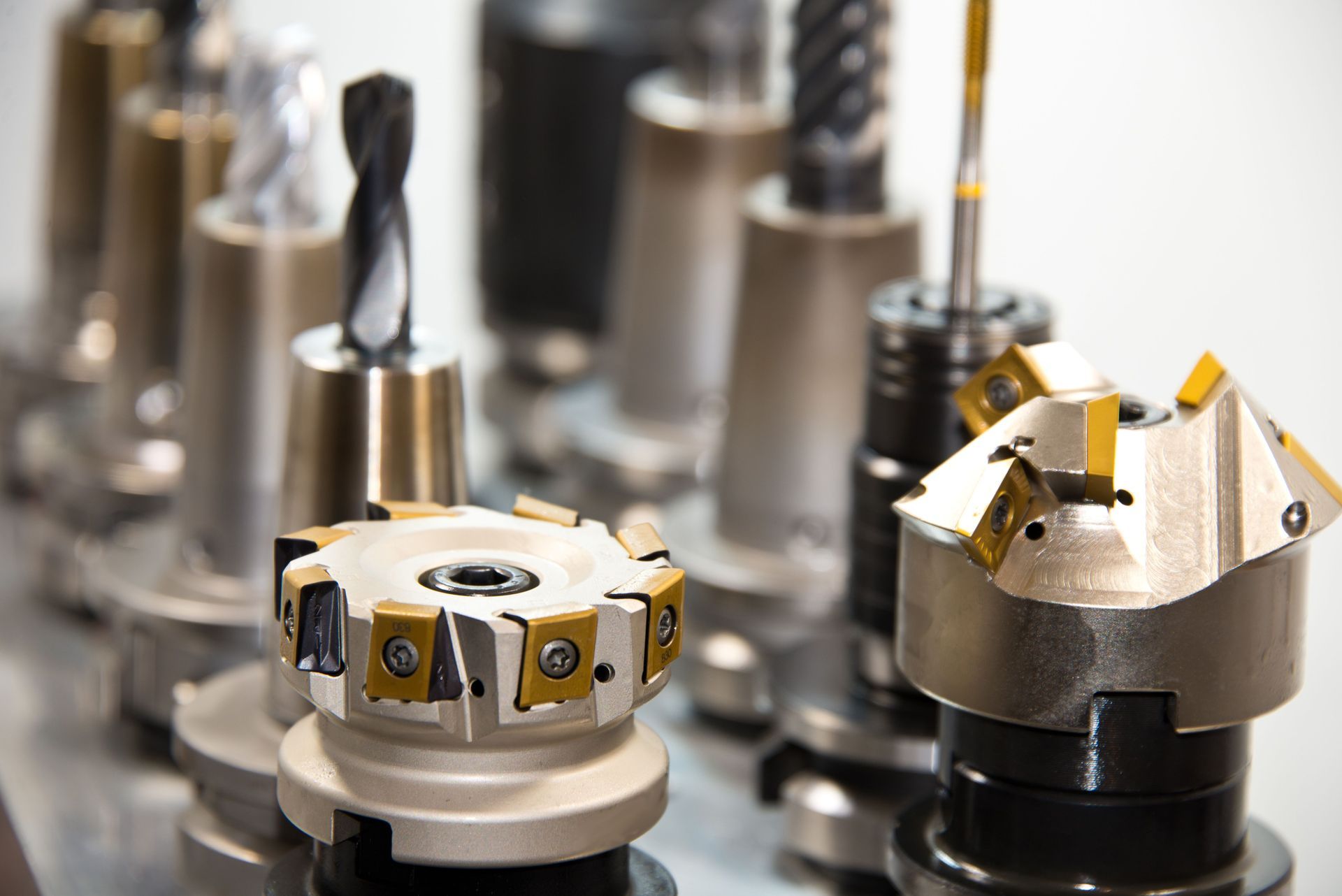
The cutter blade is responsible for cutting wire into slugs:
👉 This step defines the starting quality of the entire forming process.
3.2 Chain Reaction of Poor Cutter Precision
Insufficient cutter blade precision can lead to:
- Uneven end surfaces → irregular material flow
- Burr formation → increased die wear
- Length variation → inconsistent filling across stations
- Off-center cutting → misaligned products
Research shows that initial asymmetry during cutting significantly affects die stress distribution and displacement in subsequent stages, potentially causing premature tool failure.
3.3 Why High-End Fasteners Demand Higher Cutter Precision
For products such as:
- Multi-step screws
- Automotive fasteners
- High-strength structural components
👉 Material flow must be fully controlled
Even minor deviations can result in:
- Incomplete forming
- Internal cracking
- Loss of dimensional control
4. Punch Pin + Cutter Precision = Multiplicative Effect on Yield
Many manufacturers mistakenly assume:
👉 “High-end machines guarantee high yield.”
In reality:
👉 Yield Rate = Tooling Precision × Process Stability × Material Control
Key influencing components:
- Punch Pin → forming accuracy, tool life, dimensional stability
- Cutter Blade → initial material quality, flow uniformity
- Die System → overall integration and durability
When both punch pins and cutters achieve high precision:
- Stable forming performance
- Significant defect reduction
- Extended tool life
- Substantial yield improvement
5. Why High-Precision Tooling Components Are a Competitive Advantage
Engineers searching for:
- Multi-station cold forging
- Punch pin precision
- Cutter blade precision
- Fastener tooling solutions
Are ultimately seeking:
👉 Fewer trial runs + higher first-pass success rate + stable mass production
This is exactly the value delivered by high-precision tooling components:
Key Benefits
1. Reduced Trial Costs
Accurate tooling shortens development cycles
2. Improved Production Stability
Minimizes batch variation and defect rates
3. Extended Tool Life
Reduces replacement frequency and downtime
4. Support for Complex Products
Enables micro fasteners, special heads, and multi-stage forming
6. Conclusion: Precision Is Not a Cost—It Is a Profit Driver
In the highly competitive fastener industry:
👉 Low-cost tooling often leads to higher hidden costs
True competitiveness depends on:
- The ability to consistently produce high-precision products
- Rapid new product introduction
- Overall manufacturing cost reduction
At the core of all these factors:
👉 Punch pin and cutter blade precision